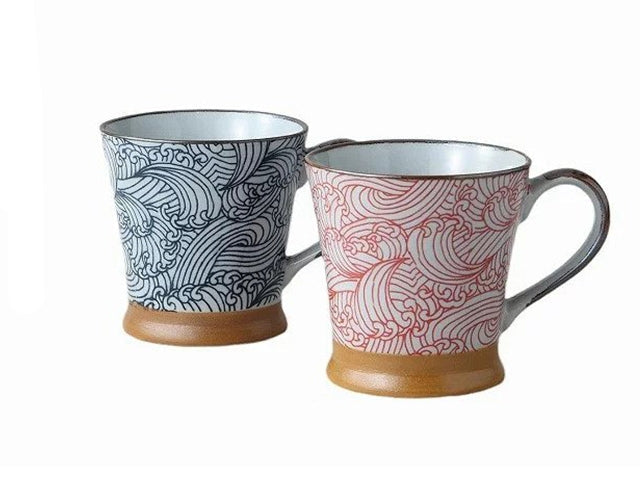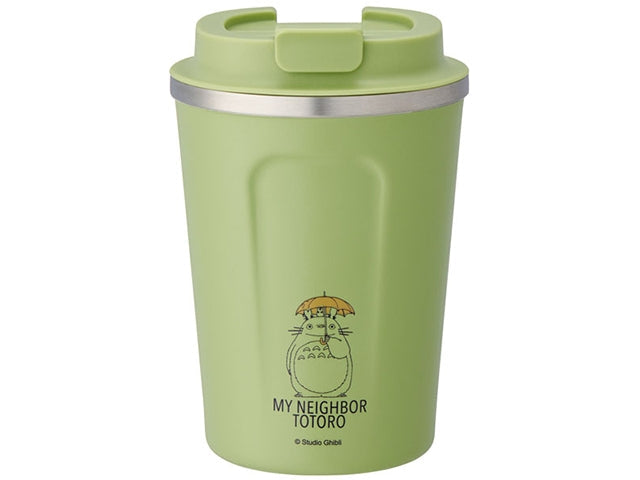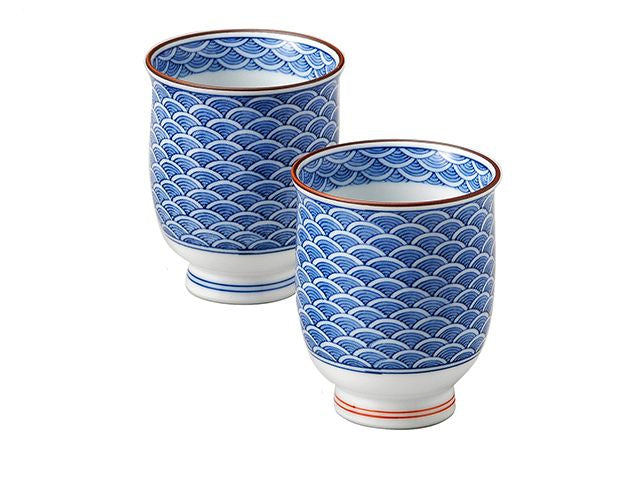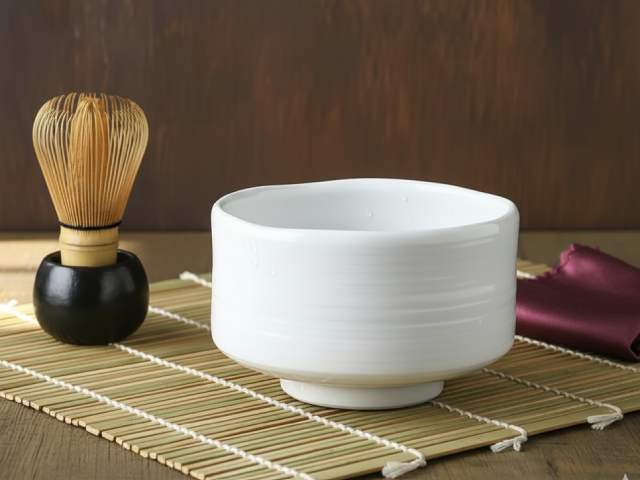

Tea cups - Arita pottery
15 productsTeacups in Japan
Traditional...Modern...Original...Made in Japan...The Japanese tea cups you were looking for are here!
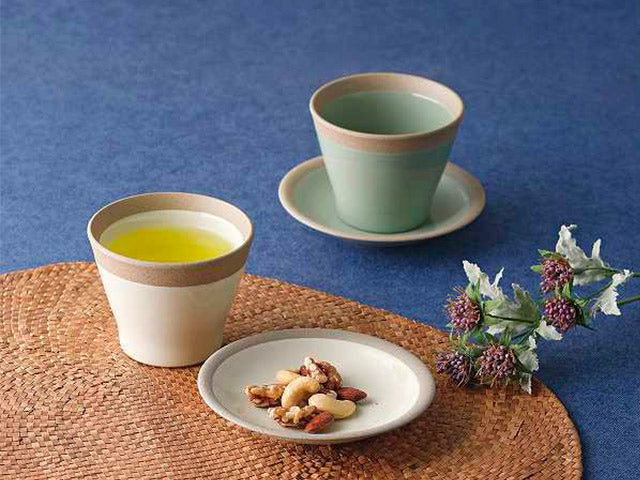
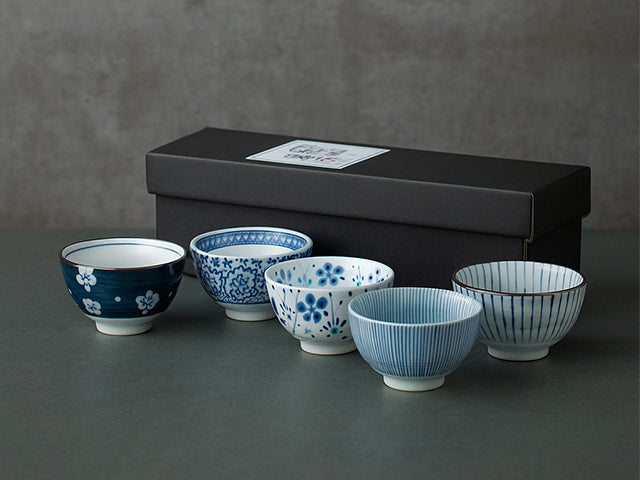
A teacup or a tea bowl is not chosen randomly. Along with the teapot, these objects are part of the tea ceremony’s ritual and remain a personal object. There is a proper way to handle and to carry the cup. Tea in Japan is about the pleasure of drinking it (obviously) but also the pleasure to make and offer tea itself, or share a pleasant evening over tea.
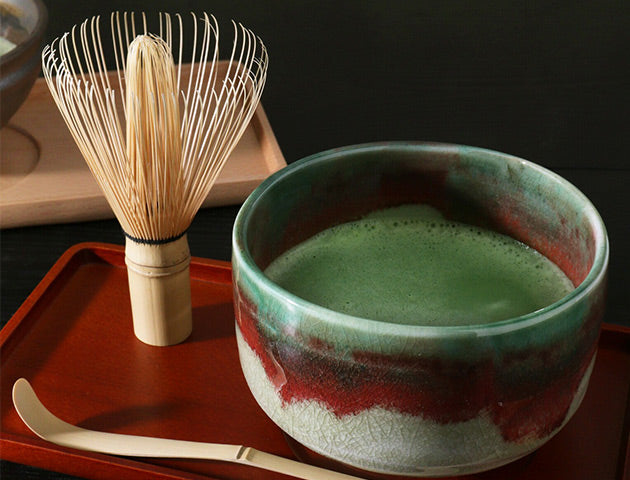
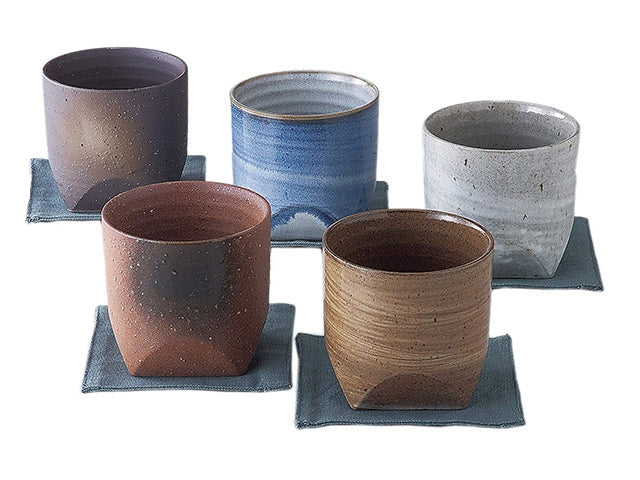
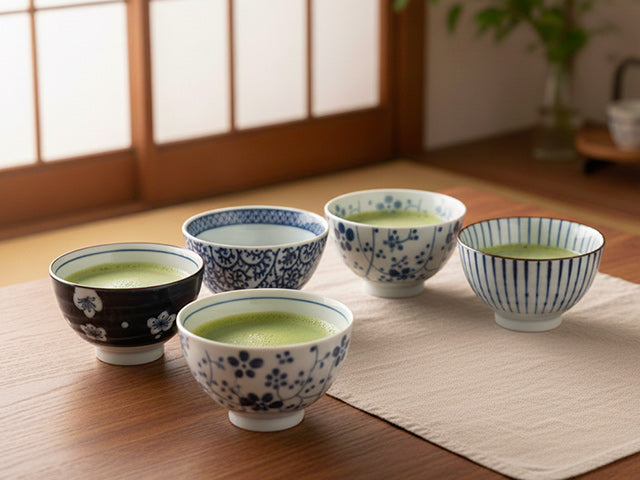
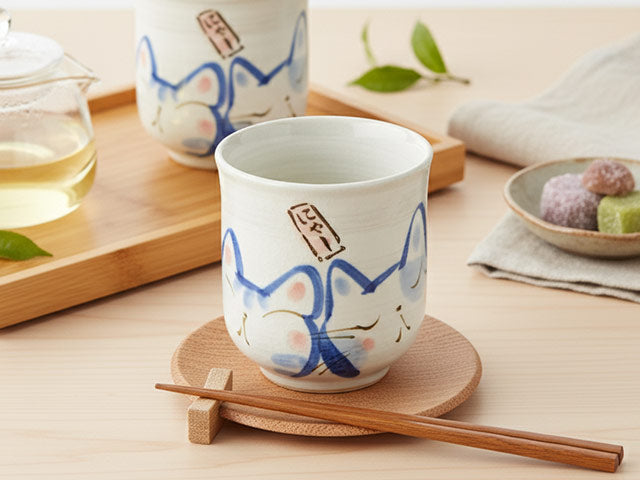
In Japan, Japanese teacups of all sizes can be found, adapting to the habits of each, in clay, porcelain or ceramic, or glass, but never cast iron. The ones for the ceremony are larger as a bowl for lunch to allow the brewing of tea powder. Traditionally, tea cups don’t have any handles, so never fill to the top to avoid burning yourself.
Enjoyment of drinking tea may be enhanced by using different teapots but also different tea cups depending on the type of tea. For example, small cups are used for the highest grades of tea (gyokuro). On the other hand, Sencha cups are usually small and shallow. Tall cups are commonly used for hojicha. In summer, cold tea is often served in glass cups.
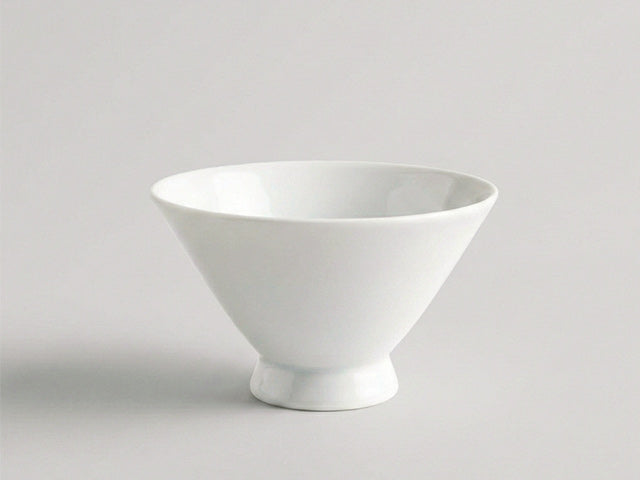
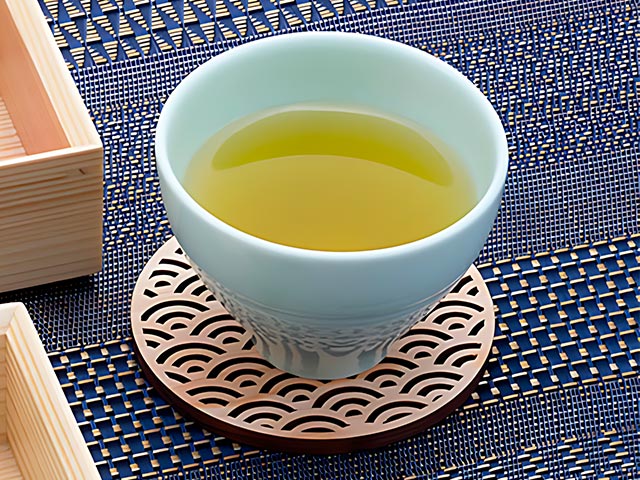
In Japan, many people prefer drinking tea from cups that are white inside so you can enjoy the color of your beverage.Arita pottery and ceramic
The art of Japanese ceramics.
As you know, we are based in Fukuoka in Kyushu. Arita, one of the most famous cities of Japan for its ceramics, is also located in Kyushu, about two hours away by car from Fukuoka.All tea lovers know Arita for its beautiful and high quality ceramic also called yakimono.
You will find fin on akazuki.com a nice selection of Arita handmade ceramics.
The history of Arita Ceramics, where the world-famous "Ko-imari" was
first produced (Arita porcelain is also called "Imari" porcelain),
begins with the introduction of porcelain production to Japan from
Korea. At the end of the 16th century, Hideyoshi Toyotomi, the political
ruler of Japan at that lime, invaded Korea. When his armed forces
withdrew from Korea, some of the feudal lords who participated in the
campaign under Hideyoshi brought a number of Korean potters back to
Japan. Among these potters was one named Ri Sampei (Korean Name Lee
Charn-Pyung).
This Ri Sampei discovered kaolin in Izumiyama, Arita, and proceeded to
make Japan's first fine white porcelain. The potters, who soon settled
down in Arita and became naturalized citizens of Japan, started creating
fine white porcelains with a unique Japanese beauty, different from the
Korean originals. Arita porcelain was subsequently influenced by the
Indien and Persian patterns which were likely introduced to Japan by the
way of the Silk Road.
From the beginning of thel7th century, Holland continually ordered large
amounts of Arita porcelains by way of the trading port on Dejima, the
artificial Island located in Nagasaki Harbour that served as the only
link between Japan and Europe. For 250 years, the trading ships of the
Dutch East India Company carried Arita porcelains to Europe where the
porcelain were loved for their delicate beauty representative of the
Orient. The course these ships navigated was the "Ceramic Road on the
Sea". Princes and noblemen of Europe at the time were eager to obtain
Arita porcelains. For instance. Arita porcelain was valued above gold
and silver by members of the Hapsburg family, the Bourbon family, the
Hanover family and other famous families. August the First, the King of
Saxony in Germany, was a fanatical collector. He built a ceramic museum
with a Japanese style exterior and interior. You can see some of his
magnificent collection at the Dresden Art Museum which has over a
thousand articles of 'Ko-Imari', porcelain and over 200 examples of
'Kakiernon' porcelain. August the First also built a ceramic factory in
Mizzen, the origin of porcelain manufacturing in Europe. As a result,
the various patterns of Arita porcelain greatly influenced European
arts, from baroque to rococo.
Arita porcelain is divided into four styles. The first, "Gosho-Style"
porcelain was specially made for the Japanese Emperor, 'Mikado". "Gosho"
means the place where the emperor lived. lb style is unknown to public
tilt recently and it's admitted academically few years ago. Then,
"Nabeshima-style" porcelain was made in specialized kilns. It was
produced only for the feudal domain of Nabeshima, presented as gifts to
generals and feudal lords. A representative of a Nabeshima-style
porcelain painter is the lmaemon House. The second style, "Koimari-style
porcelain", used the "Sometsuke" and "Somenishiki" technique. The
third, "Kakiemon-style" porcelain is famous for "Mme", which is similar
to "Somenishiki". The Kakiemon House has passed down its techniques from
generation to generation.
Wabi-cha
The way of tea
Wabi-cha or tea of wabi, the main stream tea ceremony today was established by Murata Juko in the Muromachi period and perfected by Sen-no Rikyu in the Azuchi-momoyama period.
Though tea parties have been held before Murata Juko established wabi-cha, parties were luxurious and expensive bowls made in China, called Kara-Mono, were used.
Regarding this, Murata Juko, a Zen priest, proposed a tea party, where spiritual interaction was emphasized, without the luxuries. Later his style of tea party came to be called Wabi-cha. The essence is for people to face one another while sharing a cup of tea in a room where the superfluous things are disposed of.
In the tea party, since people face of one another, just as a person, they should not be discriminated against, based on rank, position and whether rich or poor.
Wabi-cha as well as Zen Buddhism has affected Japanese culture deeply.
However, it has changed with times, and now people have come to compare the value of the tea bowl and the hanging scrolls of the tea rooms as if in a competition. Therefore, the actual tea ceremony is not necessarily the tea ceremony of Murata Juko’s aspiration.