



A year of Japanese festivals: what happens, what people eat, and what comes out of the cupboard
Japanese festivals are usually written up as spectacle. Floats, fireworks, lanterns. That is accurate but incomplete, because for the people taking part a matsuri is mostly a domestic event: a particular food gets made, a particular dish comes out of the cupboard, a particular cloth gets used, and then it all goes away for another year. We live in Fukuoka, a city with two of the loudest festivals in the country, and this is the calendar as it is actually lived, month by month, with the household side included.
January: New Year, the only one that stops the country
Oshogatsu is not one day, it is a week in which normal life pauses. Households eat osechi ryori, a set of preserved dishes arranged in stacked lacquer boxes called jubako, each one carrying a meaning: black soybeans for health, herring roe for children, rolled kelp for joy. The boxes exist because they were designed so nobody had to cook for three days.
Alongside it comes ozoni, a soup with mochi, which changes completely from region to region. In Kanto the broth is clear and the mochi is grilled and square. In Kansai the broth is white miso and the mochi is round. In our part of Kyushu you will often find chicken and a local green called katsuona. Arguing about ozoni is a national pastime.
What comes out: the lacquer boxes, the good soup bowls, and the special chopsticks called iwaibashi, tapered at both ends because one end is said to be for the gods.

February: Setsubun, the one that involves throwing food
On 3 February, households throw roasted soybeans at a family member wearing a demon mask, shouting the formula that sends bad luck out and good luck in. Then everyone eats the number of beans matching their age. In the Kansai region, and increasingly everywhere because the convenience stores promoted it, people also eat an uncut sushi roll called ehomaki, silently, facing the lucky direction of the year.
It is a children's festival more than anything else, and it is genuinely fun.

March: Hinamatsuri, and the dolls that come out for two weeks
The Doll Festival on 3 March is for girls. An ornamental set of dolls representing the imperial court is displayed on a tiered red stand, then packed away immediately afterwards, because superstition says leaving them out delays the daughter's marriage. Whether anyone believes that or not, everyone packs them away.
The food is pale pink and white: chirashizushi scattered with pink fish and yellow egg, clam soup, and three-coloured diamond rice cakes. If you want to know what goes on top of the chirashi, our glossary of sushi fish and toppings covers the neta by name.

April: Hanami, which is not really a festival
Cherry blossom viewing has no shrine, no procession and no fixed date. It is a picnic, held under the trees, with a blue plastic sheet and a great deal of beer. The food is bento, and it is the one occasion of the year when the bento box is genuinely on display rather than eaten at a desk. Pink, white and green hanami dango are the sweet.
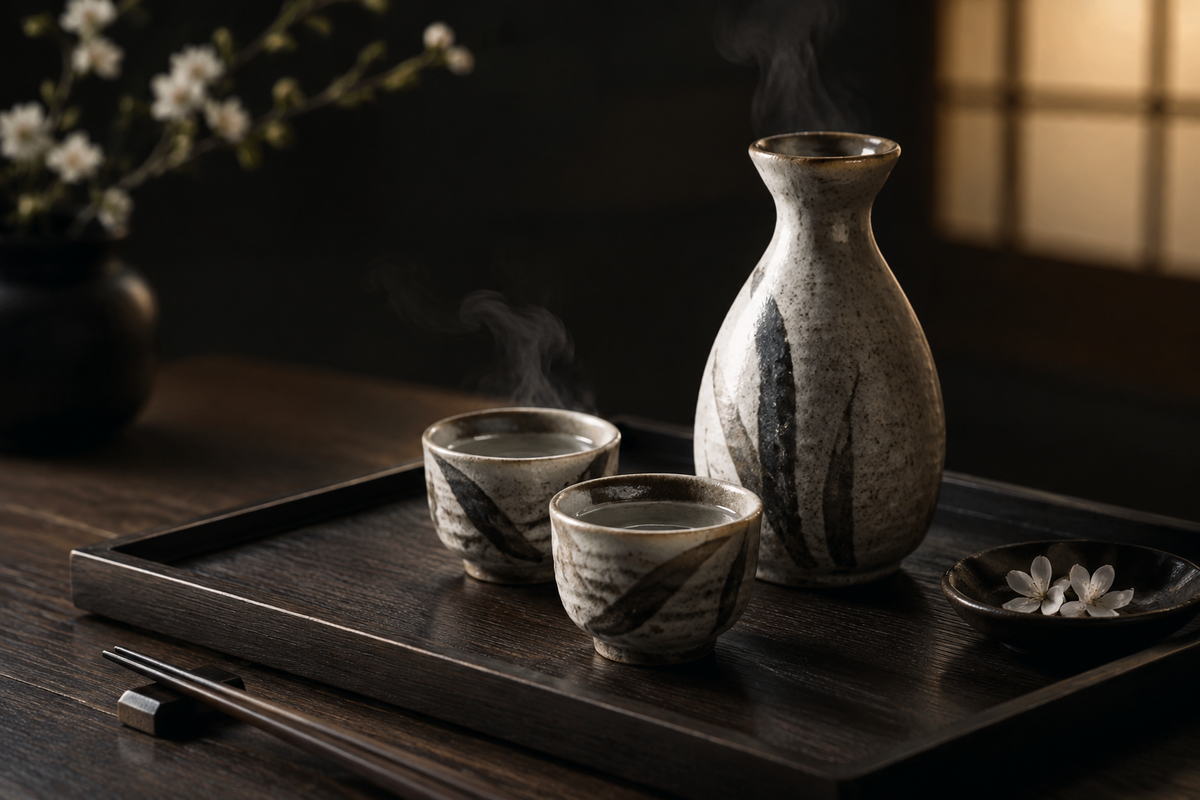
What comes out: the multi-tier bento boxes, a furoshiki to carry them in, and a sake set if the group is feeling traditional.
May: Children's Day and the carp streamers

On 5 May, families with sons fly koinobori, carp-shaped windsocks, one for each family member. The carp is chosen because it swims upstream. The food is kashiwa mochi, a rice cake wrapped in an oak leaf that is not eaten, and chimaki, steamed in bamboo.
July: the loud months begin
This is where Fukuoka earns its reputation. Hakata Gion Yamakasa runs from 1 to 15 July and ends with teams of men carrying one-ton wooden floats at a run through the city at 4:59 in the morning. It is not a parade, it is a race, and the whole district smells of the grilled food stalls set up along the route.
Tanabata, on 7 July, is the gentle one: people write wishes on strips of coloured paper and tie them to bamboo branches. The story behind it, two lovers separated by the Milky Way and allowed to meet once a year, is Chinese in origin.
Then come the fireworks festivals, hanabi taikai, all summer. This is yukata season. If you have never worn one, it is the informal cotton relative of the kimono, worn to festivals and to hot spring towns, and it is much easier to put on than people assume. Our yukata collection sits here.
The food of the summer festival stall
Every matsuri has the same row of stalls, and the menu barely varies across the country:
- Takoyaki: octopus batter balls, Osaka in origin, universal now. Made in a dimpled cast iron pan you can buy and use at home, see our takoyaki essentials.
- Yakisoba: fried noodles with a sweet brown sauce, cooked on a flat griddle the size of a door.
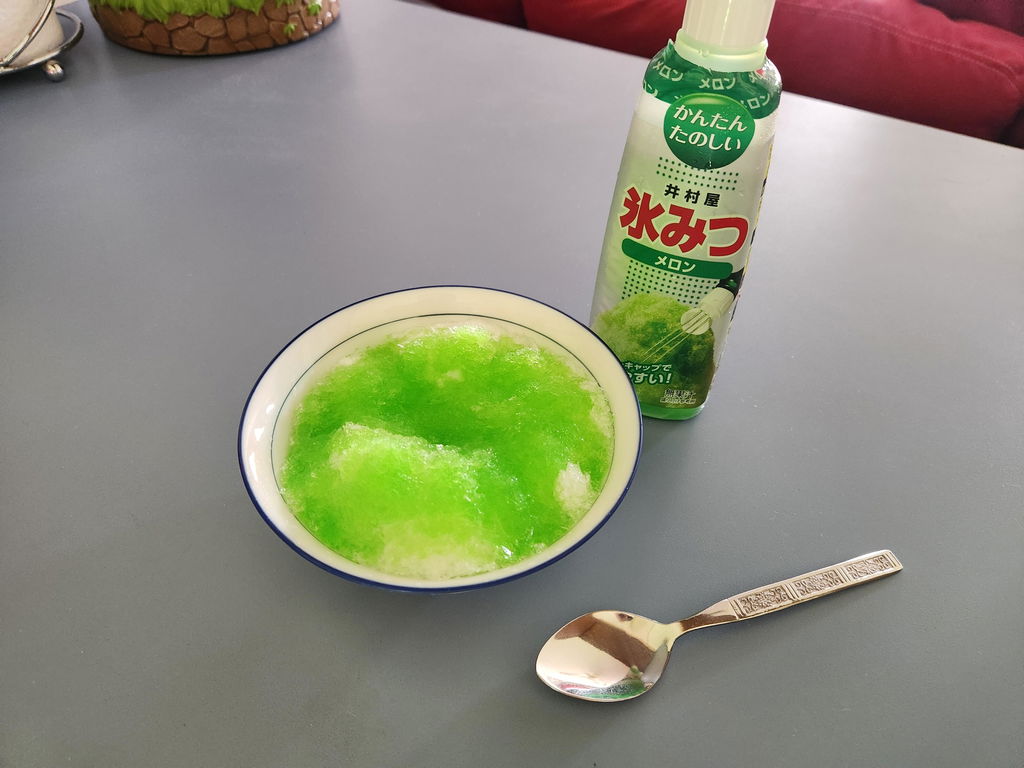
- Kakigori: shaved ice with syrup. Nothing like a snow cone; the ice is shaved into flakes so fine it melts on contact. We wrote a whole piece on making kakigori at home because the machine is the entire secret.
- Ringo ame: candied apples, mostly bought for the photograph.
- Karaage and yakitori: the savoury anchors. Fukuoka takes its karaage seriously, and the neighbouring town of Nakatsu claims to be its capital.
August: Obon, the quiet one
Obon is when ancestors are said to return home. Families travel back to their home towns, clean the graves, and hold bon odori dances in the evening, usually in a circle around a raised wooden platform in a school yard or a park. In some regions, paper lanterns are floated down rivers on the final night to send the spirits back.
It is the most-travelled week of the Japanese year and the one where a foreign visitor is most likely to find everything closed. The food is vegetarian in the strict households, and simple everywhere: chilled soba, cucumber, aubergine.
November: Shichi-Go-San
On 15 November, children of three, five and seven are dressed formally and taken to a shrine. They are given chitose ame, a long thin stick of red and white candy in a paper bag decorated with cranes and turtles, both symbols of long life. The candy is deliberately long because the wish is for a long life.
The two Fukuoka festivals worth planning a trip around
Since we are here, an honest local opinion rather than a guidebook list.
Hakata Dontaku, 3 and 4 May, claims the largest attendance of any Japanese festival, well over two million people. It is a parade, it is cheerful, and it is extremely crowded. Come if you like crowds.
Hakata Gion Yamakasa, mid-July, is the better one. The final run, the oiyama, starts before five in the morning on 15 July, which filters out the casual crowd. Standing on a Hakata street in the dark while a one-ton float goes past at a sprint is not something you forget. If you come for one Japanese festival, come for this.
Setting a festival table outside Japan
You do not need a shrine to mark one of these. Three of them travel well:
- Hanami: a park, a bento, a blanket. Anywhere with a flowering tree works, and nobody in Japan would object to the substitution.
- Hinamatsuri: chirashizushi on a wide flat plate, clam soup, and something pink. Our sushi essentials covers the serving side.
- Tanabata: strips of paper, a branch, and a wish. It costs nothing and children take to it immediately.
The common thread across all of them is that the object matters. The lacquer box, the carp streamer, the paper strip, the yukata. A Japanese festival is a set of things that come out of a cupboard once a year and then go back, and that annual rhythm is most of what gives them their weight.